Common Mistakes to Avoid When Booking UK Staycations
From school holiday pricing and cancellation terms to hidden fees and misleading locations, here's how to...

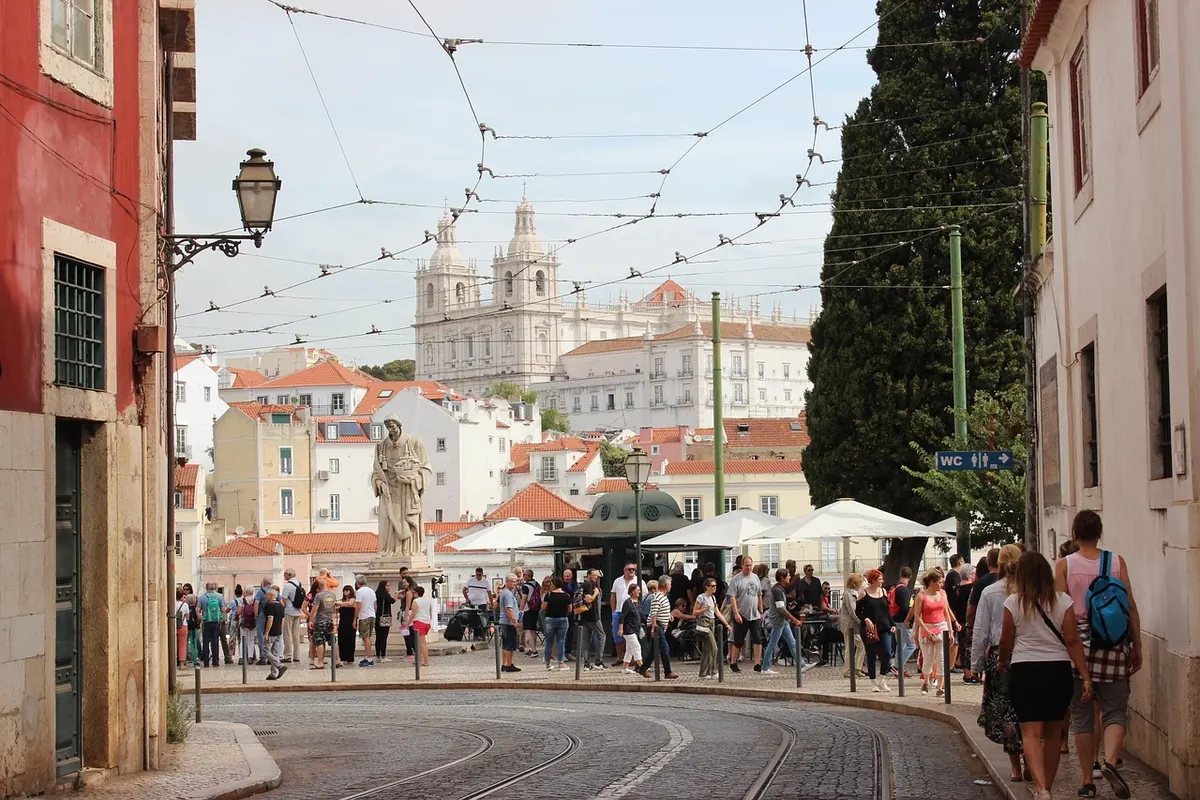
Lisbon has a reputation for tiled façades, steep tram rides and bills that make you wince. The first two are deserved. The third is optional. Step away from the riverside terraces and the queue outside the famous custard tart shop, and the city still eats extraordinarily well for very little. You just need to know which door to open, and when.
The backbone of affordable eating here is the tasca: a small, family-run eating house with a handful of tables, a television in the corner and a menu dictated by whatever looked good at the market that morning. You will also see them described as a casa de pasto, or just restaurante, with little decoration beyond azulejo tiles and a football calendar taped to the wall.
These places are not designed for lingering. They are designed to feed the neighbourhood, quickly and honestly. That is precisely why they are cheap.
If the menu is only in Portuguese, that is a good sign, not a bad one. Point at what the next table has, or ask for the prato do dia. Nobody will be offended.
The single most useful thing to understand about eating in Lisbon is that lunch is the main meal. The kitchen goes full tilt between roughly half past twelve and half past two, then often shuts until the evening. The same food, served after seven, frequently costs noticeably more.
Ask for the ementa do dia or look for a handwritten board by the door. Many places put together a fixed lunch that includes soup, a main, sometimes a drink and a coffee. In business districts such as Saldanha, Alvalade or near Avenida da Liberdade, you will find office workers packed shoulder to shoulder at exactly this hour, which tells you where the quality is.
Practical timing: arrive before one o'clock to avoid the queue, and do not turn up at three expecting a hot meal. Sundays are quieter and many kitchens close altogether. August is the month when half the city's cooks go on holiday, so check before making a special trip.
Lisbon's municipal markets have quietly become some of the best places to eat cheaply at midday. Some have proper food halls; others simply have a few counters where you perch on a stool and eat what the fishmonger did not sell that morning.
Worth knowing: Mercado de Arroios, Mercado de Campo de Ourique, Mercado 31 de Janeiro near Saldanha, and Mercado de Alvalade, which has a cluster of small kitchens. The big market at Cais do Sodré is famous and busy, and prices there have crept up accordingly — still a fine introduction, but not the cheapest lunch in town.
Rules of thumb for market eating: go early, because stalls often close by mid-afternoon and many shut on Sundays and Mondays. Order grilled fish by weight if it is sold that way, and do not be shy about asking for a smaller piece. A half portion of grilled chicken with rice and salad is a solid, inexpensive lunch almost anywhere in the city.
Distance from the main squares matters more than anything else. Walk ten minutes uphill or inland from Baixa, Chiado or the riverfront and prices drop while quality often rises.
Mouraria, Intendente, Anjos, Arroios, Graça and Penha de França are full of tascas feeding residents rather than visitors. Alcântara and Estrela have steady local trade. Campo de Ourique feels like a village and eats like one. Bairro Alto, so loud at night, is surprisingly good value at lunchtime when the bars are shut.
A reliable signal: a short menu in Portuguese, a crowd of regulars standing at the counter, and no photographs of the food outside. If a place has a greeter on the pavement and a menu in five languages, you are paying for the pavement.
You can eat very well in Lisbon without ever sitting down for a full meal. A pastelaria will serve you a bica (a small espresso) and a pastry for breakfast, and standing at the counter is cheaper than taking a table. Add a meia de leite and a pão com manteiga if you need more.
Look out for a bifana or a prego — pork or steak in a roll, usually with mustard or garlic butter — from a snack bar or a kiosk. In summer, caracóis (snails) appear in bowls with cold beer. Churrasqueiras, the grill houses, sell takeaway roast chicken with piri-piri sauce, which is one of the great cheap dinners in the city.
Supermarkets such as Pingo Doce, Continente and Lidl are everywhere. Bread, cheese, fruit and a bottle of wine for a picnic by the river costs less than a starter in a tourist restaurant.
Tipping in Portugal is not obligatory and is not built into the bill as a service charge. What is normal:
Mealtimes run later than in the UK. Lunch is roughly half twelve to half two, dinner from about half seven until ten. Kitchens commonly close in the afternoon, so a four o'clock hunger pang is best answered by a café. Tap water in Lisbon is safe to drink, and asking for água da torneira is perfectly acceptable, though some places will bring bottled instead.
Vegetarians will find the traditional tasca menu limited, but most places will happily make a plate of soup, salad, rice and greens. A little Portuguese goes a long way: bom dia, por favor, obrigado if you are male and obrigada if you are female, and a conta, por favor when you want the bill.
Eat where the locals eat, at the hours they eat, and Lisbon becomes one of the best-value cities in Western Europe.
Photo: vikol009 / Pixabay
From school holiday pricing and cancellation terms to hidden fees and misleading locations, here's how to...
How to break Britain's longest National Trail into manageable day sections, with practical advice on...
A practical pre-trip checklist for first-time solo backpackers, covering paperwork, gear, hostels, safety,...