A Local's Guide to Affordable Eats in Lisbon
A practical guide to eating well and cheaply in Lisbon, from family-run tascas and market counters to...

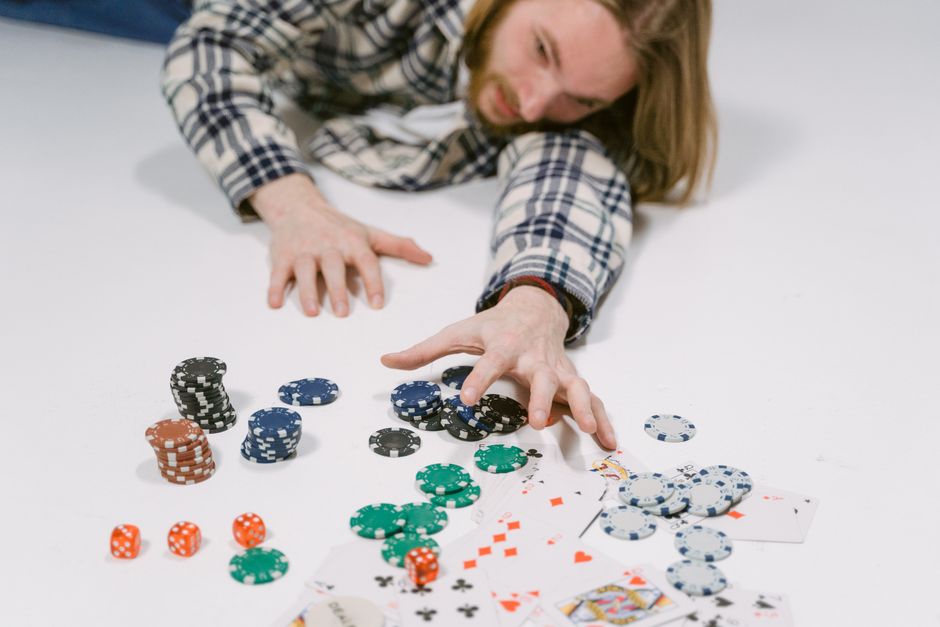
Every slot player has heard the myth: "This machine is due for a payout." It's comforting. It's also completely wrong, and understanding why is the single most useful thing you can do for your bankroll. The mechanics of modern slots, poker odds, and sports betting markets all rest on the same foundation — probability theory — and once you grasp how it actually works, you stop gambling on feelings and start making decisions.
Modern slot machines don't run on physical reels with gears and levers. They run on a Random Number Generator (RNG), a piece of software that cycles through thousands of numbers every second. When you hit spin, it grabs whatever number is passing through at that exact millisecond and maps it to a result. There is no memory. The machine doesn't know you've lost eight spins in a row, and it has no obligation to "give it back."
What the machine does have is a Return to Player (RTP) percentage. A slot with 96% RTP is programmed to return, on average, 96 cents for every dollar wagered — over millions of spins. That 4% edge is the house advantage, and it's where the casino's profit comes from. Here's the part most players miss: the 96% figure is a mathematical expectation over an enormous sample size. In a single session of 300 spins, your actual return could be 0%, 400%, or anything in between. Variance is not a bug; it's the entire experience.
Consider a practical example. On a $1 spin with 96% RTP, you're technically losing four cents per spin in expected value. Over 500 spins that's $20 of expected loss — but the realistic outcome distribution is wide. You might walk away up $150 or down $200. The RTP tells you the long-run trend, not your Tuesday night.
RTP gets all the attention; volatility is the more useful number. Volatility (sometimes called variance) describes how the payouts are distributed. Two slots can both advertise 96% RTP but play completely differently:
If you have a $50 bankroll and sit down at a high-volatility slot with $1 spins, you'll likely bust before you see a single bonus round. Same RTP, different experience. Match volatility to your bankroll and your temperament, not to the biggest advertised jackpot. Some of the clearest guidance on this comes from mahjong ways.
For high-volatility slots, budget at least 200–300 spins' worth of stake. So $1 spins need a $200–$300 bankroll if you actually want a shot at the feature. For low-volatility games, 100 spins is plenty. This isn't a guarantee — it's damage control.
Slots and most table games are you against the house, and the house always wins in the long run. Poker is different: you're playing against other humans, and the house takes a rake. That single structural difference changes everything. A skilled poker player can be profitable over thousands of hands because the money flows from weaker opponents, not from a house edge.
The math that matters in poker isn't RTP — it's pot odds, implied odds, and equity. If there's $100 in the pot and you need to call $20 to continue, you're getting 5-to-1 odds, meaning you only need to win more than roughly 17% of the time to break even on that call. If your hand has, say, a 25% chance to improve to the winner by the river, the call is profitable. This is the foundation of every disciplined decision at the table.
Position is the other lever that casual players ignore. Acting last gives you more information on every street. A mediocre hand in late position is often more profitable than a premium hand in early position, because you get to see what everyone else does before committing chips. Players who consistently win aren't running hotter — they're exploiting position and folding more.
Sportsbooks build in a margin — usually 4–8% per market — which means the implied probability of all outcomes sums to more than 100%. The favorite might be priced at -200 (implied 66.7%) against an underdog at +170 (implied 37%), and those two add to 103.7%. That extra 3.7% is the vig, and it's your hurdle.
The only sustainable way to profit in sports betting is to consistently find prices better than the market's closing line. If you bet a team at +150 and it closes at +120, you got value — the market moved toward your side. Doing that repeatedly, over hundreds of bets, is how professionals grind out a few percent of ROI per year. It's unglamorous and it requires work: tracking line movements, understanding injuries, weather, and public betting patterns.
Chasing parlays, on the other hand, is a fast route to zero. A five-leg parlay at +2500 might look tempting, but compounding five 6% house edges produces a brutal effective hold for the book. The math isn't friendly.
Here's the uncomfortable truth nobody selling a "system" wants to admit: in games with a fixed house edge like slots, roulette, and most casino table games, no strategy changes the long-run math. You can manage variance, extend playtime, and chase entertainment value — but you cannot turn a negative expectation positive. The edge is baked into the software.
What you can control is everything around the edge:
The players who last aren't luckier. They've internalized the numbers, treat gambling as entertainment with a defined cost, and never confuse a hot streak with an edge. The math doesn't care about your feelings — and honestly, that's what makes it worth learning.
So next time you spin, bet, or raise, you'll know exactly what's happening beneath the surface. That's a far better position to be in than believing the machine owes you something. It never did.
A practical guide to eating well and cheaply in Lisbon, from family-run tascas and market counters to...
From school holiday pricing and cancellation terms to hidden fees and misleading locations, here's how to...
How to break Britain's longest National Trail into manageable day sections, with practical advice on...